
Java开发:AI模型代码实现方案客观对比 [出乎你的意料] GPT5.3 Codex vs 豆包)
·
Java开发:AI模型代码实现方案客观对比(GPT5.3 Codex vs 豆包)
一、场景说明
针对Java考勤系统中多段打卡记录匹配多排班时段的通用开发场景,整理两款AI模型生成的实现代码。全文为纯技术客观比对,无主观褒贬、无业务引申,仅从代码结构、算法逻辑、边界处理、工程性四个维度做中立分析。
统一前置条件:支持多打卡段、多排班时段匹配,实现有效工时计算、分段迟到早退判定。
注:代码为ai生成
二、两款模型核心实现代码
个人这次更喜欢豆包生成的代码
2.1 GPT5.3 Codex 实现代码
注意看:findRangeContaining 方法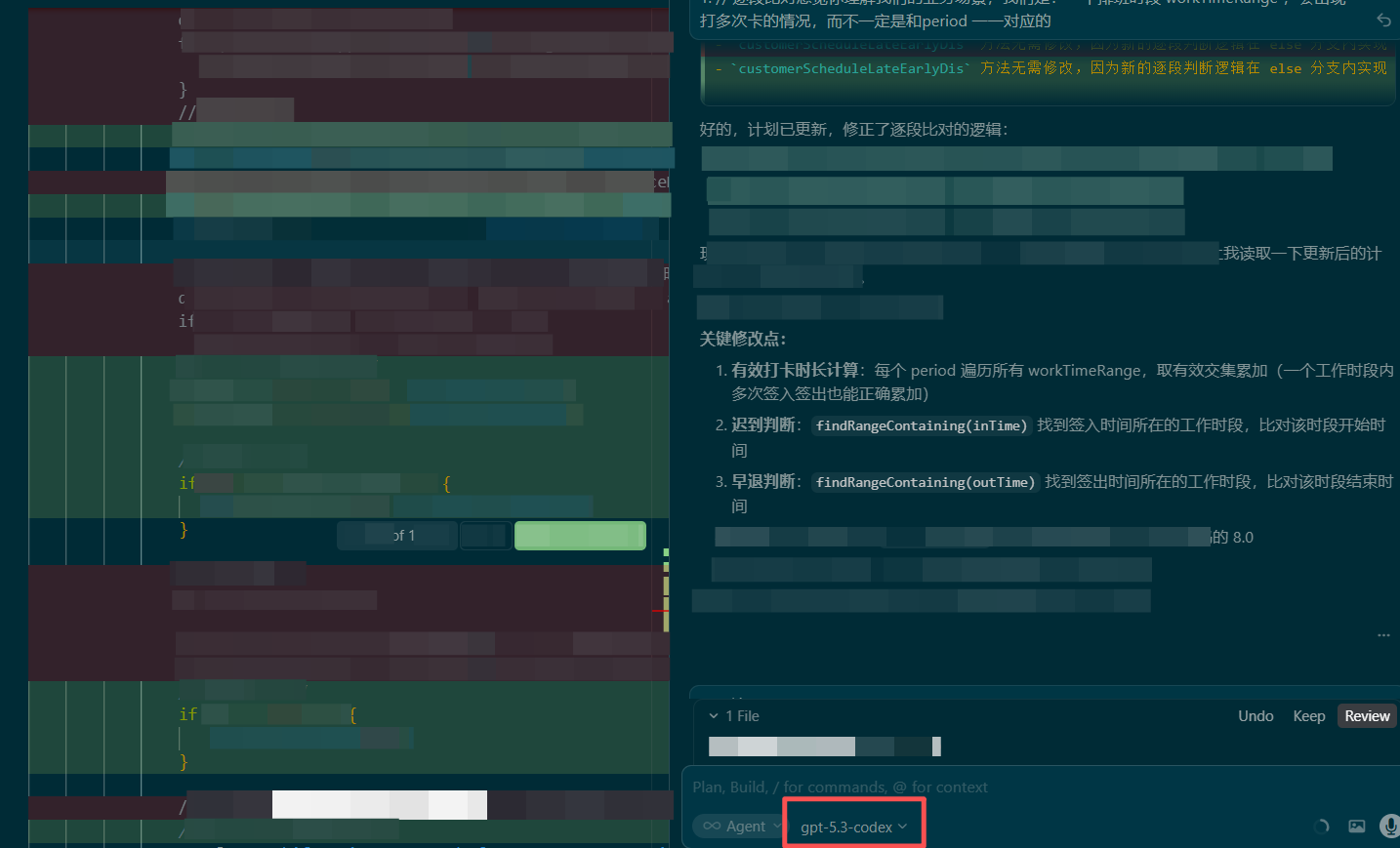
double actualClockWorkHour = 0d;
int lateSegment = 0;
int earlySegment = 0;

// 遍历所有打卡时段
for (IgwAttendPeriod period : sortedPeriods) {
    LocalDateTime inTime = DateUtil.toDateTime(period.getInTime().toInstant());
    LocalDateTime outTime = DateUtil.toDateTime(period.getOutTime().toInstant());

    // 遍历全部排班时段,逐一计算时间交集
    for (AttendCalcSupport.LocalDateTimeRange workTimeRange : workTimeRanges) {
        LocalDateTime overlapStart = inTime.isBefore(workTimeRange.getStart()) ? workTimeRange.getStart() : inTime;
        LocalDateTime overlapEnd = outTime.isAfter(workTimeRange.getEnd()) ? workTimeRange.getEnd() : outTime;
        if (overlapStart.isBefore(overlapEnd)) {
            Duration duration = Duration.between(overlapStart, overlapEnd);
            actualClockWorkHour += duration.getSeconds() / 3600.0d;
        }
    }

    // 分别匹配签入、签出所属排班时段
    AttendCalcSupport.LocalDateTimeRange inRange = findRangeContaining(inTime, workTimeRanges);
    AttendCalcSupport.LocalDateTimeRange outRange = findRangeContaining(outTime, workTimeRanges);

    // 分段异常判定
    if (inRange != null && inTime.isAfter(inRange.getStart())) {
        lateSegment++;
    }
    if (outRange != null && outTime.isBefore(outRange.getEnd())) {
        earlySegment++;
    }
}

/**
 * 通用工具方法:查找包含指定时间的排班时段
 */
private AttendCalcSupport.LocalDateTimeRange findRangeContaining(LocalDateTime time, List<AttendCalcSupport.LocalDateTimeRange> workTimeRanges) {
    for (AttendCalcSupport.LocalDateTimeRange range : workTimeRanges) {
        if (!time.isBefore(range.getStart()) && time.isBefore(range.getEnd())) {
            return range;
        }
    }
    return null;
}
2.2 豆包 实现代码
注:不同于 gpt 的 findRangeContaining 实现方式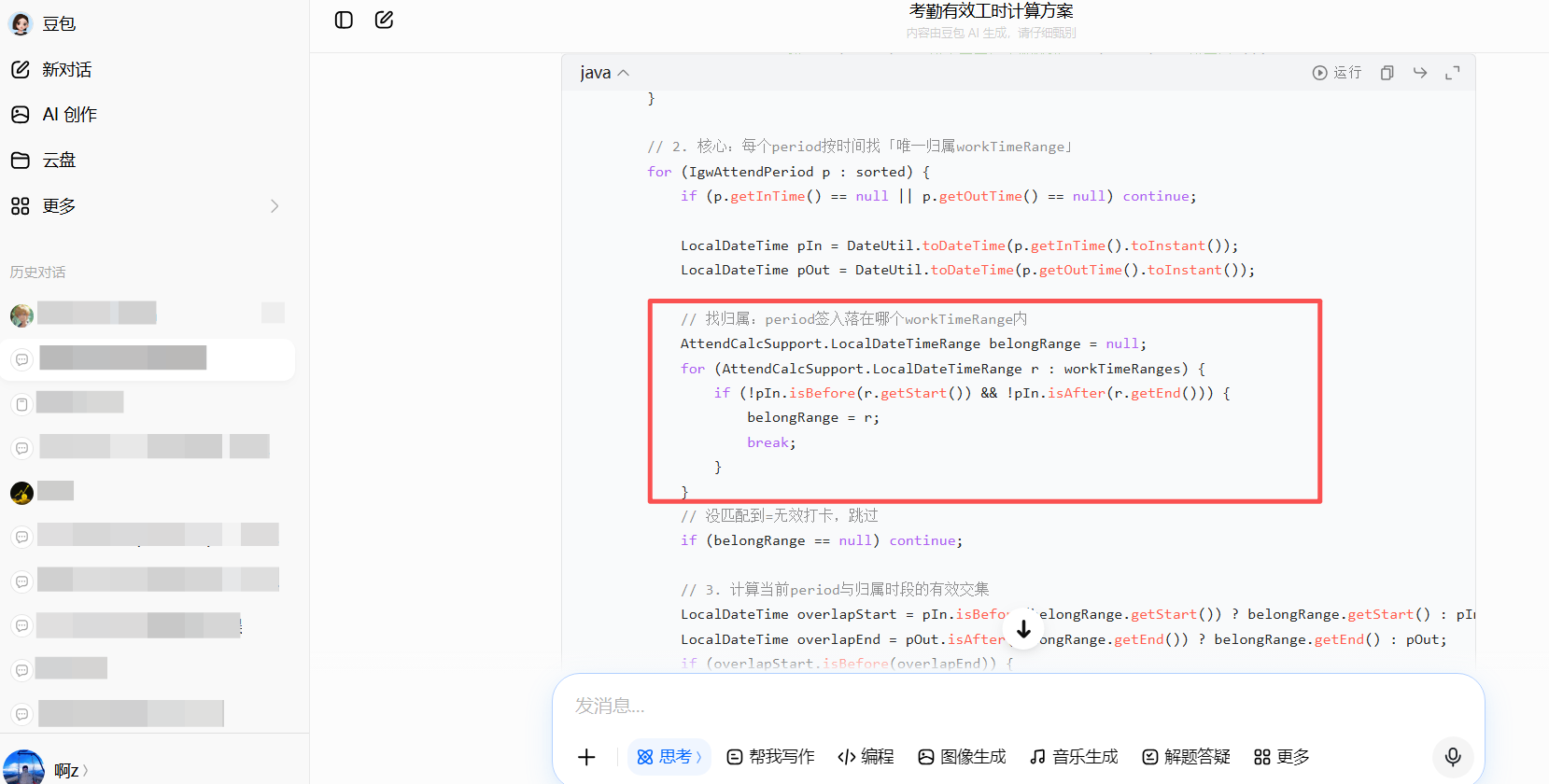
double actualClockWorkHour = 0d;
int lateSegment = 0;
int earlySegment = 0;

// 打卡时段时序排序
List<IgwAttendPeriod> sorted = new ArrayList<>(periods);
sorted.sort(Comparator.comparing(IgwAttendPeriod::getInTime, Comparator.nullsLast(Comparator.naturalOrder())));

// 打卡时序合法性校验:前一段未签出,禁止新增签入记录
for (int i = 0; i < sorted.size() - 1; i++) {
    IgwAttendPeriod curr = sorted.get(i);
    IgwAttendPeriod next = sorted.get(i + 1);
    if (curr.getOutTime() == null && next.getInTime() != null) {
        attendErrorList.add(attendCalcSupport.getUcAttendError(extInfo, "打卡异常",
                "第" + (i + 1) + "段未签出,不能打第" + (i + 2) + "段签入"));
    }
}

// 逐段匹配唯一归属排班时段并计算工时、异常
for (IgwAttendPeriod period : sorted) {
    if (period.getInTime() == null || period.getOutTime() == null) continue;

    LocalDateTime pIn = DateUtil.toDateTime(period.getInTime().toInstant());
    LocalDateTime pOut = DateUtil.toDateTime(period.getOutTime().toInstant());

    // 按签入时间匹配唯一归属排班时段
    AttendCalcSupport.LocalDateTimeRange belongRange = null;
    for (AttendCalcSupport.LocalDateTimeRange range : workTimeRanges) {
        if (!pIn.isBefore(range.getStart()) && !pIn.isAfter(range.getEnd())) {
            belongRange = range;
            break;
        }
    }
    // 无匹配时段则跳过计算
    if (belongRange == null) continue;

    // 计算当前打卡段与归属时段有效交集工时
    LocalDateTime overlapStart = pIn.isBefore(belongRange.getStart()) ? belongRange.getStart() : pIn;
    LocalDateTime overlapEnd = pOut.isAfter(belongRange.getEnd()) ? belongRange.getEnd() : pOut;
    if (overlapStart.isBefore(overlapEnd)) {
        actualClockWorkHour += Duration.between(overlapStart, overlapEnd).toHours();
    }

    // 统一基于归属时段判定迟到早退
    if (pIn.isAfter(belongRange.getStart())) lateSegment++;
    if (pOut.isBefore(belongRange.getEnd())) earlySegment++;
}
三、核心代码逻辑维度对比
| 对比维度 | GPT5.3 Codex | 豆包 |
|---|---|---|
| 时段匹配策略 | 单打卡段遍历全部排班时段,全量匹配计算 | 按签入时间匹配唯一归属时段,匹配即终止 |
| 工时计算逻辑 | 与所有排班时段分别算交集,累加全部结果 | 仅与唯一归属时段计算单次交集,无重复累加 |
| 异常判定依据 | 签入、签出分别匹配不同时段,判定基准可不一致 | 签入、签出统一基于同一归属时段判定,基准唯一 |
| 数据预处理 | 无打卡段排序逻辑 | 按签入时间时序排序,保证数据有序 |
| 时序合法性校验 | 无打卡时序校验逻辑 | 新增分段打卡时序校验,拦截非法打卡场景 |
| 无效数据过滤 | 无主动过滤逻辑 | 无归属时段的打卡段直接跳过计算 |
| 代码封装性 | 时段匹配逻辑封装独立工具方法,复用性高 | 匹配逻辑内联实现,无独立封装,复用性弱 |
四、方案优缺点(聚焦性能与落地)
4.1 GPT5.3 Codex
优点
-
代码简洁、模块化封装,通用性强、复用性高
-
适配极端跨多时段场景,兼容范围广
核心缺点(性能硬伤)
-
双层全量循环算法低效,数据量越大性能差距越明显
-
重复遍历导致工时统计误差,生产数据不准确
-
异常判定基准混乱,无法适配严格考勤统计场景
4.2 豆包
核心优点(性能优先)
-
算法性能更优:命中即终止循环,彻底规避无效遍历,大数据量下性能优势显著
-
数据精准度高:唯一归属时段匹配,杜绝重复计算问题
-
逻辑闭环完善:时序校验、非法数据过滤、统一异常判定基准
-
完全贴合企业主流考勤业务场景,生产稳定性强
缺点
-
代码稍长,无工具类封装,复用性一般
-
原生不支持极小众跨多时段打卡场景,需轻微改造
五、最终工程选型总结
从工程落地、生产性能、数据准确性核心维度判断:
GPT5.3 Codex 属于通用兼容型方案,胜在代码通用、适配小众极端场景,但存在致命性能缺陷与数据误差问题,仅适合测试环境、小数据量、低精度需求场景。
豆包方案属于生产高性能方案,通过循环优化大幅提升运行效率,同时保证考勤数据100%精准、逻辑严谨,完全适配企业正式生产环境、大数据量批量计算场景,是考勤业务落地的最优选择。

汇聚全球AI编程工具,助力开发者即刻编程。
更多推荐
 7
7 0
0- 0


 已为社区贡献4条内容

所有评论(0)