
MyBatis -- 6. Web中使用MyBatis
第四步:定义pojo类:Account
package com.powernode.bank.pojo;

/**
 * 银行账户类
 * @author 老杜
 * @version 1.0
 * @since 1.0
 */
public class Account {
    private Long id;
    private String actno;
    private Double balance;

    @Override
    public String toString() {
        return "Account{" +
                "id=" + id +
                ", actno='" + actno + '\'' +
                ", balance=" + balance +
                '}';
    }

    public Account() {
    }

    public Account(Long id, String actno, Double balance) {
        this.id = id;
        this.actno = actno;
        this.balance = balance;
    }

    public Long getId() {
        return id;
    }

    public void setId(Long id) {
        this.id = id;
    }

    public String getActno() {
        return actno;
    }

    public void setActno(String actno) {
        this.actno = actno;
    }

    public Double getBalance() {
        return balance;
    }

    public void setBalance(Double balance) {
        this.balance = balance;
    }
}
第五步:编写AccountDao接口,以及AccountDaoImpl实现类
分析dao中至少要提供几个方法,才能完成转账:
- 转账前需要查询余额是否充足:selectByActno
- 转账时要更新账户:update
package com.powernode.bank.dao;

import com.powernode.bank.pojo.Account;

/**
 * 账户数据访问对象
 * @author 老杜
 * @version 1.0
 * @since 1.0
 */
public interface AccountDao {

    /**
     * 根据账号获取账户信息
     * @param actno 账号
     * @return 账户信息
     */
    Account selectByActno(String actno);

    /**
     * 更新账户信息
     * @param act 账户信息
     * @return 1表示更新成功,其他值表示失败
     */
    int update(Account act);
}
package com.powernode.bank.dao.impl;

import com.powernode.bank.dao.AccountDao;
import com.powernode.bank.pojo.Account;
import com.powernode.bank.utils.SqlSessionUtil;
import org.apache.ibatis.session.SqlSession;

public class AccountDaoImpl implements AccountDao {
    @Override
    public Account selectByActno(String actno) {
        SqlSession sqlSession = SqlSessionUtil.openSession();
        Account act = (Account)sqlSession.selectOne("selectByActno", actno);
        sqlSession.close();
        return act;
    }

    @Override
    public int update(Account act) {
        SqlSession sqlSession = SqlSessionUtil.openSession();
        int count = sqlSession.update("update", act);
        sqlSession.commit();
        sqlSession.close();
        return count;
    }
}
第六步:AccountDaoImpl中编写了mybatis代码,需要编写SQL映射文件了
<?xml version="1.0" encoding="UTF-8" ?>
<!DOCTYPE mapper
        PUBLIC "-//mybatis.org//DTD Mapper 3.0//EN"
        "http://mybatis.org/dtd/mybatis-3-mapper.dtd">

<mapper namespace="account">
    <select id="selectByActno" resultType="com.powernode.bank.pojo.Account">
        select * from t_act where actno = #{actno}
    </select>
    <update id="update">
        update t_act set balance = #{balance} where actno = #{actno}
    </update>
</mapper>
第七步:编写AccountService接口以及AccountServiceImpl
package com.powernode.bank.exception;

/**
 * 余额不足异常
 * @author 老杜
 * @version 1.0
 * @since 1.0
 */
public class MoneyNotEnoughException extends Exception{
    public MoneyNotEnoughException(){}
    public MoneyNotEnoughException(String msg){ super(msg); }
}
package com.powernode.bank.exception;

/**
 * 应用异常
 * @author 老杜
 * @version 1.0
 * @since 1.0
 */
public class AppException extends Exception{
    public AppException(){}
    public AppException(String msg){ super(msg); }
}
package com.powernode.bank.service;

import com.powernode.bank.exception.AppException;
import com.powernode.bank.exception.MoneyNotEnoughException;

/**
 * 账户业务类。
 * @author 老杜
 * @version 1.0
 * @since 1.0
 */
public interface AccountService {

    /**
     * 银行账户转正
     * @param fromActno 转出账户
     * @param toActno 转入账户
     * @param money 转账金额
     * @throws MoneyNotEnoughException 余额不足异常
     * @throws AppException App发生异常
     */
    void transfer(String fromActno, String toActno, double money) throws MoneyNotEnoughException, AppException;
}
package com.powernode.bank.service.impl;

import com.powernode.bank.dao.AccountDao;
import com.powernode.bank.dao.impl.AccountDaoImpl;
import com.powernode.bank.exception.AppException;
import com.powernode.bank.exception.MoneyNotEnoughException;
import com.powernode.bank.pojo.Account;
import com.powernode.bank.service.AccountService;

public class AccountServiceImpl implements AccountService {

    private AccountDao accountDao = new AccountDaoImpl();

    @Override
    public void transfer(String fromActno, String toActno, double money) throws MoneyNotEnoughException, AppException {
        // 查询转出账户的余额
        Account fromAct = accountDao.selectByActno(fromActno);
        if (fromAct.getBalance() < money) {
            throw new MoneyNotEnoughException("对不起,您的余额不足。");
        }
        try {
            // 程序如果执行到这里说明余额充足
            // 修改账户余额
            Account toAct = accountDao.selectByActno(toActno);
            fromAct.setBalance(fromAct.getBalance() - money);
            toAct.setBalance(toAct.getBalance() + money);
            // 更新数据库
            accountDao.update(fromAct);
            accountDao.update(toAct);
        } catch (Exception e) {
            throw new AppException("转账失败,未知原因!");
        }
    }
}
第八步:编写AccountController
package com.powernode.bank.web.controller;

import com.powernode.bank.exception.AppException;
import com.powernode.bank.exception.MoneyNotEnoughException;
import com.powernode.bank.service.AccountService;
import com.powernode.bank.service.impl.AccountServiceImpl;

import javax.servlet.ServletException;
import javax.servlet.http.HttpServlet;
import javax.servlet.http.HttpServletRequest;
import javax.servlet.http.HttpServletResponse;
import java.io.IOException;
import java.io.PrintWriter;

/**
 * 账户控制器
 * @author 老杜
 * @version 1.0
 * @since 1.0
 */
@WebServlet("/transfer")
public class AccountController extends HttpServlet {

    private AccountService accountService = new AccountServiceImpl();

    @Override
    protected void doPost(HttpServletRequest request, HttpServletResponse response)
            throws ServletException, IOException {
        // 获取响应流
        response.setContentType("text/html;charset=UTF-8");
        PrintWriter out = response.getWriter();
        // 获取账户信息
        String fromActno = request.getParameter("fromActno");
        String toActno = request.getParameter("toActno");
        double money = Integer.parseInt(request.getParameter("money"));
        // 调用业务方法完成转账
        try {
            accountService.transfer(fromActno, toActno, money);
            out.print("<h1>转账成功!!!</h1>");
        } catch (MoneyNotEnoughException e) {
            out.print(e.getMessage());
        } catch (AppException e) {
            out.print(e.getMessage());
        }
    }
}
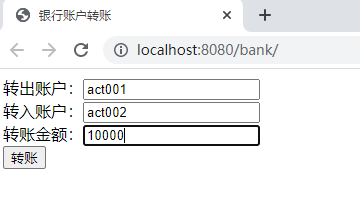
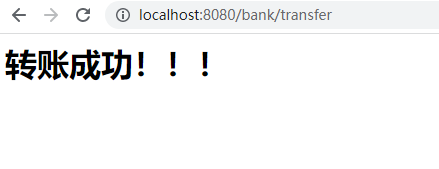
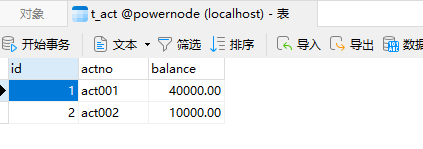
启动服务器,打开浏览器,输入地址:http://localhost:8080/bank,测试:
6.4 MyBatis对象作用域以及事务问题
✅MyBatis核心对象的作用域
SqlSessionFactoryBuilder
这个类可以被实例化、使用和丢弃,一旦创建了 SqlSessionFactory,就不再需要它了。 因此 SqlSessionFactoryBuilder 实例的最佳作用域是方法作用域(也就是局部方法变量)。 你可以重用 SqlSessionFactoryBuilder 来创建多个 SqlSessionFactory 实例,但最好还是不要一直保留着它,以保证所有的 XML 解析资源可以被释放给更重要的事情。
SqlSessionFactory
SqlSessionFactory 一旦被创建就应该在应用的运行期间一直存在,没有任何理由丢弃它或重新创建另一个实例。 使用 SqlSessionFactory 的最佳实践是在应用运行期间不要重复创建多次,多次重建 SqlSessionFactory 被视为一种代码“坏习惯”。因此 SqlSessionFactory 的最佳作用域是应用作用域。 有很多方法可以做到,最简单的就是使用单例模式或者静态单例模式。
SqlSession
每个线程都应该有它自己的 SqlSession 实例。SqlSession 的实例不是线程安全的,因此是不能被共享的,所以它的最佳的作用域是请求或方法作用域。 绝对不能将 SqlSession 实例的引用放在一个类的静态域,甚至一个类的实例变量也不行。 也绝不能将 SqlSession 实例的引用放在任何类型的托管作用域中,比如 Servlet 框架中的 HttpSession。 如果你现在正在使用一种 Web 框架,考虑将 SqlSession 放在一个和 HTTP 请求相似的作用域中。 换句话说,每次收到 HTTP 请求,就可以打开一个 SqlSession,返回一个响应后,就关闭它。 这个关闭操作很重要,为了确保每次都能执行关闭操作,你应该把这个关闭操作放到 finally 块中。 下面的示例就是一个确保 SqlSession 关闭的标准模式:
try (SqlSession session = sqlSessionFactory.openSession()) {
  // 你的应用逻辑代码
}
✅事务问题
在之前的转账业务中,更新了两个账户,我们需要保证它们的同时成功或同时失败,这个时候就需要使用事务机制,在transfer方法开始执行时开启事务,直到两个更新都成功之后,再提交事务,我们尝试将transfer方法进行如下修改:
package com.powernode.bank.service.impl;

import com.powernode.bank.dao.AccountDao;
import com.powernode.bank.dao.impl.AccountDaoImpl;
import com.powernode.bank.exception.AppException;
import com.powernode.bank.exception.MoneyNotEnoughException;
import com.powernode.bank.pojo.Account;
import com.powernode.bank.service.AccountService;
import com.powernode.bank.utils.SqlSessionUtil;
import org.apache.ibatis.session.SqlSession;

public class AccountServiceImpl implements AccountService {

    private AccountDao accountDao = new AccountDaoImpl();

    @Override
    public void transfer(String fromActno, String toActno, double money) throws MoneyNotEnoughException, AppException {
        // 查询转出账户的余额
        Account fromAct = accountDao.selectByActno(fromActno);
        if (fromAct.getBalance() < money) {
            throw new MoneyNotEnoughException("对不起,您的余额不足。");
        }
        try {
            // 程序如果执行到这里说明余额充足
            // 修改账户余额
            Account toAct = accountDao.selectByActno(toActno);
            fromAct.setBalance(fromAct.getBalance() - money);
            toAct.setBalance(toAct.getBalance() + money);
            // 更新数据库(添加事务)
            SqlSession sqlSession = SqlSessionUtil.openSession();
            accountDao.update(fromAct);
            // 模拟异常
            String s = null;
            s.toString();
            accountDao.update(toAct);
            sqlSession.commit();
            sqlSession.close();
        } catch (Exception e) {
            throw new AppException("转账失败,未知原因!");
        }
    }
}
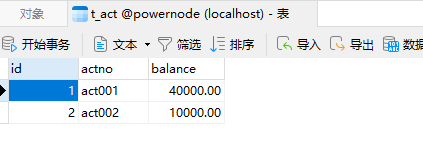
运行前注意看数据库表中当前的数据:
执行程序:
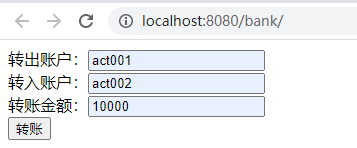
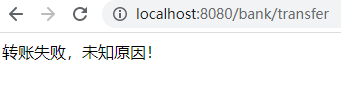
再次查看数据库表中的数据:
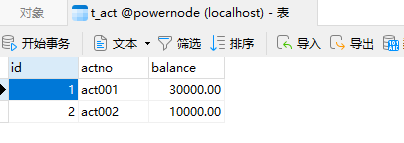
傻眼了吧!!!事务出问题了,转账失败了,钱仍然是少了1万。这是什么原因呢?主要是因为service和dao中使用的SqlSession对象不是同一个。
怎么办?为了保证service和dao中使用的SqlSession对象是同一个,可以将SqlSession对象存放到ThreadLocal当中。修改SqlSessionUtil工具类:
package com.powernode.bank.utils;

import org.apache.ibatis.io.Resources;
import org.apache.ibatis.session.SqlSession;
import org.apache.ibatis.session.SqlSessionFactory;
import org.apache.ibatis.session.SqlSessionFactoryBuilder;

/**
 * MyBatis工具类
 *
 * @author 老杜
 * @version 1.0
 * @since 1.0
 */
public class SqlSessionUtil {
    private static SqlSessionFactory sqlSessionFactory;

    /**
     * 类加载时初始化sqlSessionFactory对象
     */
    static {
        try {
            SqlSessionFactoryBuilder sqlSessionFactoryBuilder = new SqlSessionFactoryBuilder();
            sqlSessionFactory = sqlSessionFactoryBuilder.build(Resources.getResourceAsStream("mybatis-config.xml"));
        } catch (Exception e) {
            e.printStackTrace();
        }
    }

    private static ThreadLocal<SqlSession> local = new ThreadLocal<>();

    /**
     * 每调用一次openSession()可获取一个新的会话,该会话支持自动提交。
     *
     * @return 新的会话对象
     */
    public static SqlSession openSession() {
        SqlSession sqlSession = local.get();
        if (sqlSession == null) {
            sqlSession = sqlSessionFactory.openSession();
            local.set(sqlSession);
        }
        return sqlSession;
    }

    /**
     * 关闭SqlSession对象
     * @param sqlSession
     */
    public static void close(SqlSession sqlSession){
        if (sqlSession != null) {
            sqlSession.close();
        }
        local.remove();
    }
}
修改dao中的方法:AccountDaoImpl中所有方法中的提交commit和关闭close代码全部删除
package com.powernode.bank.dao.impl;

import com.powernode.bank.dao.AccountDao;
import com.powernode.bank.pojo.Account;
import com.powernode.bank.utils.SqlSessionUtil;
import org.apache.ibatis.session.SqlSession;

public class AccountDaoImpl implements AccountDao {
    @Override
    public Account selectByActno(String actno) {
        SqlSession sqlSession = SqlSessionUtil.openSession();
        Account act = (Account)sqlSession.selectOne("account.selectByActno", actno);
        return act;
    }

    @Override
    public int update(Account act) {
        SqlSession sqlSession = SqlSessionUtil.openSession();
        int count = sqlSession.update("account.update", act);
        return count;
    }
}
修改service中的方法:
package com.powernode.bank.service.impl;

import com.powernode.bank.dao.AccountDao;
import com.powernode.bank.dao.impl.AccountDaoImpl;
import com.powernode.bank.exception.AppException;
import com.powernode.bank.exception.MoneyNotEnoughException;
import com.powernode.bank.pojo.Account;
import com.powernode.bank.service.AccountService;
import com.powernode.bank.utils.SqlSessionUtil;
import org.apache.ibatis.session.SqlSession;

public class AccountServiceImpl implements AccountService {

    private AccountDao accountDao = new AccountDaoImpl();

    @Override
    public void transfer(String fromActno, String toActno, double money) throws MoneyNotEnoughException, AppException {
        // 查询转出账户的余额
        Account fromAct = accountDao.selectByActno(fromActno);
        if (fromAct.getBalance() < money) {
            throw new MoneyNotEnoughException("对不起,您的余额不足。");
        }
        try {
            // 程序如果执行到这里说明余额充足
            // 修改账户余额
            Account toAct = accountDao.selectByActno(toActno);
            fromAct.setBalance(fromAct.getBalance() - money);
            toAct.setBalance(toAct.getBalance() + money);
            // 更新数据库(添加事务)
            SqlSession sqlSession = SqlSessionUtil.openSession();
            accountDao.update(fromAct);
            // 模拟异常
            String s = null;
            s.toString();
            accountDao.update(toAct);
            sqlSession.commit();
            SqlSessionUtil.close(sqlSession);  // 只修改了这一行代码。
        } catch (Exception e) {
            throw new AppException("转账失败,未知原因!");
        }
    }
}
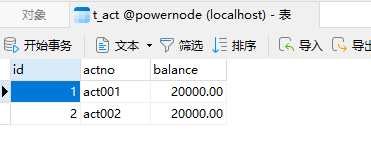
当前数据库表中的数据:
再次运行程序:
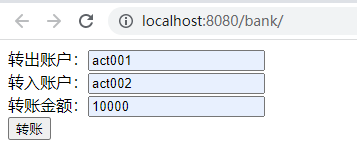
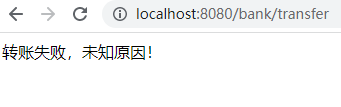
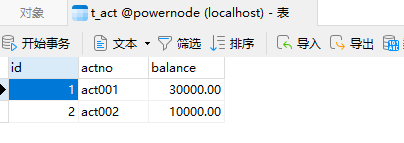
查看数据库表:没有问题。
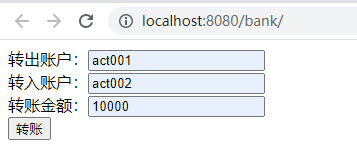
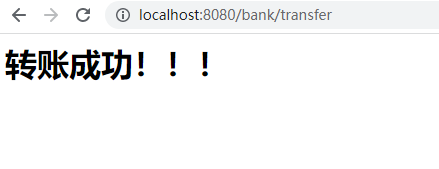
再测试转账成功:
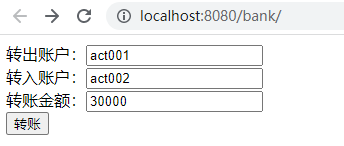
如果余额不足呢:
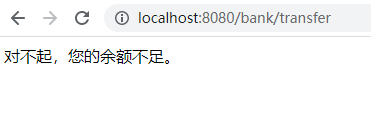
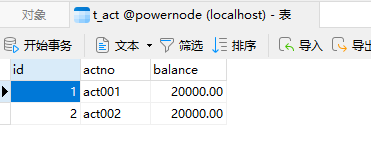
账户的余额依然正常:
6.5 分析当前程序存在的问题
我们来看一下DaoImpl的代码
package com.powernode.bank.dao.impl;

import com.powernode.bank.dao.AccountDao;
import com.powernode.bank.pojo.Account;
import com.powernode.bank.utils.SqlSessionUtil;
import org.apache.ibatis.session.SqlSession;

public class AccountDaoImpl implements AccountDao {
    @Override
    public Account selectByActno(String actno) {
        SqlSession sqlSession = SqlSessionUtil.openSession();
        Account act = (Account)sqlSession.selectOne("account.selectByActno", actno);
        return act;
    }

    @Override
    public int update(Account act) {
        SqlSession sqlSession = SqlSessionUtil.openSession();
        int count = sqlSession.update("account.update", act);
        return count;
    }
}
我们不难发现,这个dao实现类中的方法代码很固定,基本上就是一行代码,通过SqlSession对象调用insert、delete、update、select等方法,这个类中的方法没有任何业务逻辑,既然是这样,这个类我们能不能动态的生成,以后可以不写这个类吗?答案:可以。

汇聚全球AI编程工具,助力开发者即刻编程。
更多推荐



 11
11 0
0- 0


 已为社区贡献4条内容

所有评论(0)