
面试官:你的项目哪里用到了 Disruptor?
Disruptor 是一个开源的高性能内存队列,由英国外汇交易公司 LMAX 开发的,获得了 2011 年的 Oracle 官方的 Duke's Choice Awards(Duke 选择大奖)。
Disruptor 提供的功能类似于 Kafka 、RocketMQ 这类分布式队列,不过,其作为范围是 JVM(内存)。
Disruptor 解决了 JDK 内置线程安全队列的性能和内存安全问题。
JDK 中常见的线程安全的队列如下:
| 队列名字 | 锁 | 是否有界 |
|---|---|---|
ArrayBlockingQueue | 加锁(ReentrantLock) | 有界 |
LinkedBlockingQueue | 加锁(ReentrantLock) | 有界 |
LinkedTransferQueue | 无锁(CAS) | 无界 |
ConcurrentLinkedQueue | 无锁(CAS) | 无界 |
从上表中可以看出:这些队列要不就是加锁有界,要不就是无锁无界。而加锁的的队列势必会影响性能,无界的队列又存在内存溢出的风险。
因此,一般情况下,我们都是不建议使用 JDK 内置线程安全队列。
Disruptor 就不一样了!它在无锁的情况下还能保证队列有界,并且还是线程安全的。
1.广播场景
广播场景在我们的开发工作中并不少见,比如系统收到上游系统的一个请求消息,然后把这个消息发送给多个下游系统来处理。Disruptor 支持广播模式。比如消费者生产的消息由三个消费者来消费:
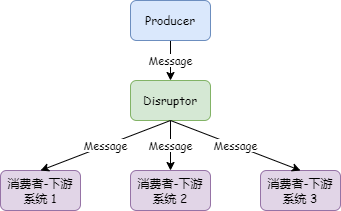
public class Broadcast {
    public static void main(String[] args) throws InterruptedException {
        int bufferSize = 1024;

        Disruptor<LongEvent> disruptor =
                new Disruptor<>(LongEvent::new, bufferSize, DaemonThreadFactory.INSTANCE);

        EventHandler<LongEvent> consumer1 = new LongEventHandler("consumer1");
        EventHandler<LongEvent> consumer2 = new LongEventHandler("consumer2");
        EventHandler<LongEvent> consumer3 = new LongEventHandler("consumer3");

        disruptor.handleEventsWith(consumer1, consumer2, consumer3);
        disruptor.start();

        RingBuffer<LongEvent> ringBuffer = disruptor.getRingBuffer();
        ByteBuffer bb = ByteBuffer.allocate(8);
        for (long l = 0; true; l++)
        {
            bb.putLong(0, l);
            ringBuffer.publishEvent((event, sequence, buffer) -> event.set(buffer.getLong(0)), bb);
            Thread.sleep(1000);
        }
    }
}
2.日志收集
再来看一个日志收集的例子。这里我们假设一个场景,业务系统集群有 3 个节点,每个节点打印的业务日志发送到 Disruptor,Disruptor 下游有 3 个消费者负责日志收集。
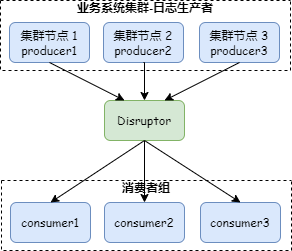
这里我们需要重新定义一个日志收集处理类,代码如下:
public class LogCollectHandler implements WorkHandler<LongEvent> {
    public LogCollectHandler(String consumer) {
        this.consumer = consumer;
    }

    private String consumer;


    @Override
    public void onEvent(LongEvent event)
    {
        System.out.println("consumer: " + consumer + ",Event: " + event);
    }
}
下面这个代码是绑定消费者的代码:
public static void main(String[] args) throws InterruptedException {
 int bufferSize = 1024;

 Disruptor<LongEvent> disruptor =
   new Disruptor<>(LongEvent::new, bufferSize, DaemonThreadFactory.INSTANCE);

 WorkHandler<LongEvent> consumer1 = new LogCollectHandler("consumer1");
 WorkHandler<LongEvent> consumer2 = new LogCollectHandler("consumer2");
 WorkHandler<LongEvent> consumer3 = new LogCollectHandler("consumer3");

 disruptor.handleEventsWithWorkerPool(consumer1, consumer2, consumer3);
 disruptor.start();
}
需要注意的是,上面使用的是 Disruptor 的
handleEventsWithWorkerPool方法,使用的消费者不是EventHandler,而是WorkHandler。消费者组里面的消费者如果是WorkHandler,那消费者之间就是有竞争的,比如一个 Event 已经被 consumer1 消费过,那就不再会被其他消费者消费了。消费者组里面的消费者如果是EventHandler,那消费者之间是没有竞争的,所有消息都会消费。
3.责任链
篇幅限制下面就只能给大家展示小册部分内容了。整理了一份核心面试笔记包括了:Java面试、Spring、JVM、MyBatis、Redis、MySQL、并发编程、微服务、Linux、Springboot、SpringCloud、MQ、Kafc
需要全套面试笔记及答案
【点击此处即可/免费获取】
责任链这种设计模式我们都比较熟悉了,同一个对象的处理有多个不同的逻辑,每个逻辑作为一个节点组成责任链,比如收到一条告警消息,处理节点分为:给开发人员发送邮件、给运维人员发送短信、给业务人员发送 OA 消息。

Disruptor 支持链式处理消息,看下面的示例代码:
public static void main(String[] args) throws InterruptedException {
 int bufferSize = 1024;

 Disruptor<LongEvent> disruptor =
   new Disruptor<>(LongEvent::new, bufferSize, DaemonThreadFactory.INSTANCE);

 EventHandler<LongEvent> consumer1 = new LongEventHandler("consumer1");
 EventHandler<LongEvent> consumer2 = new LongEventHandler("consumer2");
 EventHandler<LongEvent> consumer3 = new LongEventHandler("consumer3");

 disruptor.handleEventsWith(consumer1).then(consumer2).then(consumer3);
 disruptor.start();
}
Disruptor 也支持多个并行责任链,下图是 2 条责任链的场景:
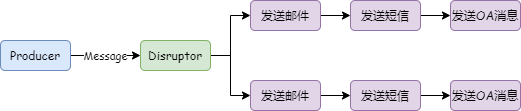
图片
这里给出一个示例代码:
public static void main(String[] args) throws InterruptedException {
 int bufferSize = 1024;

 Disruptor<LongEvent> disruptor =
   new Disruptor<>(LongEvent::new, bufferSize, DaemonThreadFactory.INSTANCE);

 EventHandler<LongEvent> consumer1 = new LongEventHandler("consumer1");
 EventHandler<LongEvent> consumer2 = new LongEventHandler("consumer2");
 EventHandler<LongEvent> consumer3 = new LongEventHandler("consumer3");
 EventHandler<LongEvent> consumer4 = new LongEventHandler("consumer4");
 EventHandler<LongEvent> consumer5 = new LongEventHandler("consumer5");
 EventHandler<LongEvent> consumer6 = new LongEventHandler("consumer6");

 disruptor.handleEventsWith(consumer1).then(consumer2).then(consumer3);
 disruptor.handleEventsWith(consumer4).then(consumer5).then(consumer6);
 disruptor.start();
}
4.多任务协作
一个经典的例子,我们在泡咖啡之前,需要烧水、洗被子、磨咖啡粉,这三个步骤可以并行,但是需要等着三步都完成之后,才可以泡咖啡。
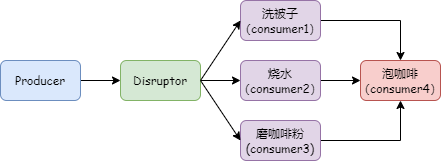
当然,这个例子可以用 Java 中的 CompletableFuture 来实现,代码如下:
public static void main(String[] args){
    ExecutorService executor = ...;
    CompletableFuture future1 = CompletableFuture.runAsync(() -> {
        try {
            washCup();
        } catch (InterruptedException e) {
            e.printStackTrace();
        }
    }, executor);

    CompletableFuture future2 = CompletableFuture.runAsync(() -> {
        try {
            hotWater();
        } catch (InterruptedException e) {
            e.printStackTrace();
        }
    }, executor);

    CompletableFuture future3 = CompletableFuture.runAsync(() -> {
        try {
            grindCoffee();
        } catch (InterruptedException e) {
            e.printStackTrace();
        }
    }, executor);

    CompletableFuture.allOf(future1, future2, future3).thenAccept(
            r -> {
                System.out.println("泡咖啡");
            }
    );
    System.out.println("我是主线程");
}
同样,使用 Disruptor 也可以实现这个场景,看下面代码:
public static void main(String[] args) throws InterruptedException {
 int bufferSize = 1024;

 Disruptor<LongEvent> disruptor =
   new Disruptor<>(LongEvent::new, bufferSize, DaemonThreadFactory.INSTANCE);

 EventHandler<LongEvent> consumer1 = new LongEventHandler("consumer1");
 EventHandler<LongEvent> consumer2 = new LongEventHandler("consumer2");
 EventHandler<LongEvent> consumer3 = new LongEventHandler("consumer3");
 EventHandler<LongEvent> consumer4 = new LongEventHandler("consumer4");

 disruptor.handleEventsWith(consumer1, consumer2, consumer3).then(consumer4);
 disruptor.start();
}
5.多消费者组
类比主流消息队列的场景,Disruptor 也可以实现多消费者组的场景,组间并行消费互不影响,组内消费者竞争消息,如下图:
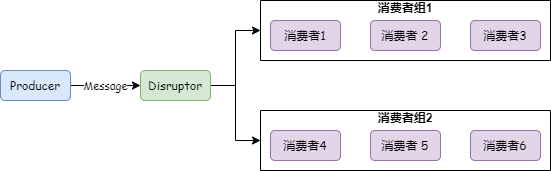
示例代码如下:
public static void main(String[] args) throws InterruptedException {
 int bufferSize = 1024;

 Disruptor<LongEvent> disruptor =
   new Disruptor<>(LongEvent::new, bufferSize, DaemonThreadFactory.INSTANCE);

 WorkHandler<LongEvent> consumer1 = new LogWorkHandler("consumer1");
 WorkHandler<LongEvent> consumer2 = new LogWorkHandler("consumer2");
 WorkHandler<LongEvent> consumer3 = new LogWorkHandler("consumer3");
 WorkHandler<LongEvent> consumer4 = new LogWorkHandler("consumer4");
 WorkHandler<LongEvent> consumer5 = new LogWorkHandler("consumer5");
 WorkHandler<LongEvent> consumer6 = new LogWorkHandler("consumer6");

 disruptor.handleEventsWithWorkerPool(consumer1, consumer2, consumer3);
 disruptor.handleEventsWithWorkerPool(consumer4, consumer5, consumer6);
 disruptor.start();
}
6.总结
通过消费者的灵活组合,Disruptor 的使用场景非常丰富。本文介绍了 Disruptor 的 5 个典型使用场景。在选型的时候,除了使用场景,更多地要考虑到 Disruptor 作为高性能内存队列的这个特点。

汇聚全球AI编程工具,助力开发者即刻编程。
更多推荐
 12
12 0
0- 0


 已为社区贡献13条内容

所有评论(0)