
PTA团体程序设计天梯赛 L2-030 冰岛人(Java)(满分不超时)
·
2018年世界杯,冰岛队因1:1平了强大的阿根廷队而一战成名。好事者发现冰岛人的名字后面似乎都有个“松”(son),于是有网友科普如下:
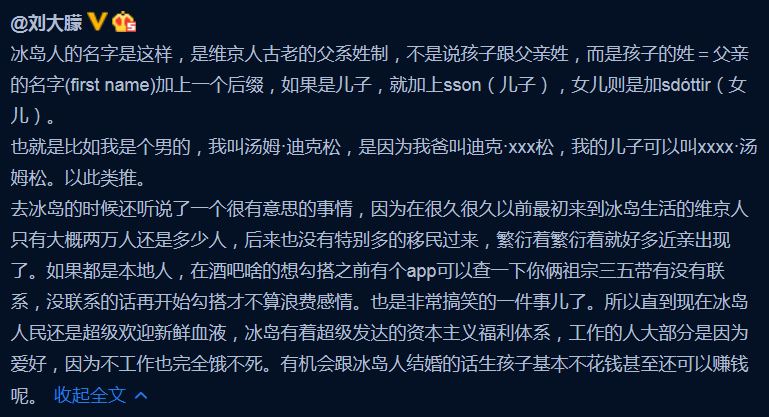
冰岛人沿用的是维京人古老的父系姓制,孩子的姓等于父亲的名加后缀,如果是儿子就加 sson,女儿则加 sdottir。因为冰岛人口较少,为避免近亲繁衍,本地人交往前先用个 App 查一下两人祖宗若干代有无联系。本题就请你实现这个 App 的功能。
输入格式:
输入首先在第一行给出一个正整数 N(1<N≤105),为当地人口数。随后 N 行,每行给出一个人名,格式为:名 姓(带性别后缀),两个字符串均由不超过 20 个小写的英文字母组成。维京人后裔是可以通过姓的后缀判断其性别的,其他人则是在姓的后面加 m 表示男性、f 表示女性。题目保证给出的每个维京家族的起源人都是男性。
随后一行给出正整数 M,为查询数量。随后 M 行,每行给出一对人名,格式为:名1 姓1 名2 姓2。注意:这里的姓是不带后缀的。四个字符串均由不超过 20 个小写的英文字母组成。
题目保证不存在两个人是同名的。
输出格式:
对每一个查询,根据结果在一行内显示以下信息:
- 若两人为异性,且五代以内无公共祖先,则输出
Yes; - 若两人为异性,但五代以内(不包括第五代)有公共祖先,则输出
No; - 若两人为同性,则输出
Whatever; - 若有一人不在名单内,则输出
NA。
所谓“五代以内无公共祖先”是指两人的公共祖先(如果存在的话)必须比任何一方的曾祖父辈分高。
输入样例:
15
chris smithm
adam smithm
bob adamsson
jack chrissson
bill chrissson
mike jacksson
steve billsson
tim mikesson
april mikesdottir
eric stevesson
tracy timsdottir
james ericsson
patrick jacksson
robin patricksson
will robinsson
6
tracy tim james eric
will robin tracy tim
april mike steve bill
bob adam eric steve
tracy tim tracy tim
x man april mikes
输出样例:
Yes
No
No
Whatever
Whatever
NA
代码长度限制
16 KB
时间限制
400 ms
内存限制
64 MB
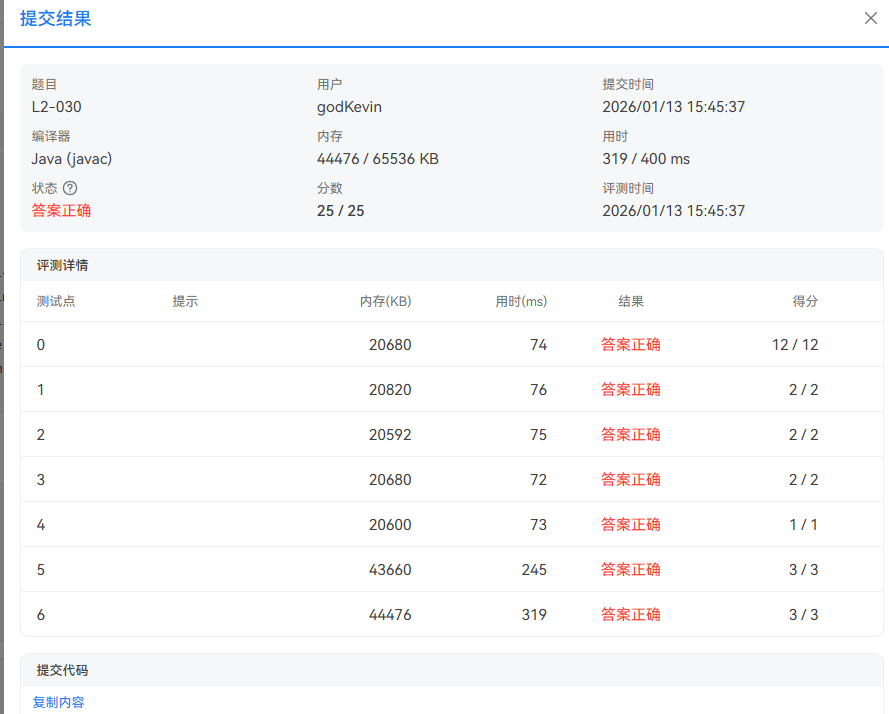
Java实现:
/**
 * 思路:
 * 1. 家谱建模:用 father[] 数组建立“儿子/女儿 -> 父亲”的单向链接。
 * 2. 维京逻辑:解析姓氏后缀推导出父亲名。特别注意:推导出的父亲即便不在名单开头,其性别也定为男。
 * 3. NA 判定:只有在输入 N 个人名时作为“名”正式出现过的人,才算在名单内。
 * 4. 亲缘算法:
 * - 从 A 向上追溯所有祖先并记录“代数”深度(自己是1代)。
 * - 从 B 向上追溯,遇到 A 的祖先时,检查双方深度。
 * - 只要任一方深度 < 5,即表示“五代以内有公共祖先”。
 * 5. 性能优化:
 * - 用 HashMap 转换 String 为 int ID,之后操作全是数组,规避 Java 频繁 GC。
 * - 核心技巧:用 visitedTag[] 配合当前查询编号,实现 $O(1)$ 的状态重置。
 */

import java.util.*;
import java.io.*;

public class Main {
    static int[] father = new int[200005];
    static int[] gender = new int[200005]; // 1:男, 0:女
    static boolean[] isExist = new boolean[200005]; // 标记是否在正式名单中
    static Map<String, Integer> nameToId = new HashMap<>(100005);
    static int idCount = 1;

    // 路径标记系统:通过 tag 区分当前是第几次查询,省去清空数组的时间
    static int[] visitedTag = new int[200005];
    static int[] depthA = new int[200005];

    static int getId(String s) {
        Integer id = nameToId.get(s);
        if (id == null) {
            id = idCount++;
            nameToId.put(s, id);
            father[id] = -1;
            gender[id] = -1;
            return id;
        }
        return id;
    }

    public static void main(String[] args) throws Exception {
        Reader sc = new Reader(System.in);
        int n = sc.nextInt();

        Arrays.fill(father, -1);
        Arrays.fill(gender, -1);

        for (int i = 0; i < n; i++) {
            String fName = sc.next();
            String lName = sc.next();
            int id = getId(fName);
            isExist[id] = true;

            // 处理后缀:截取长度要准
            if (lName.endsWith("m")) {
                gender[id] = 1;
            } else if (lName.endsWith("f")) {
                gender[id] = 0;
            } else if (lName.endsWith("sson")) {
                gender[id] = 1;
                int fid = getId(lName.substring(0, lName.length() - 4));
                father[id] = fid;
                gender[fid] = 1; // 关键:父亲必须标记为男性,否则查无此人性别
            } else if (lName.endsWith("sdottir")) {
                gender[id] = 0;
                int fid = getId(lName.substring(0, lName.length() - 7));
                father[id] = fid;
                gender[fid] = 1;
            }
        }

        int m = sc.nextInt();
        StringBuilder sb = new StringBuilder();
        for (int q = 1; q <= m; q++) {
            String n1 = sc.next(); sc.next();
            String n2 = sc.next(); sc.next();

            Integer id1 = nameToId.get(n1);
            Integer id2 = nameToId.get(n2);

            // 先判 NA,再判同性,最后搜家谱
            if (id1 == null || id2 == null || !isExist[id1] || !isExist[id2]) {
                sb.append("NA\n");
            } else if (gender[id1] == gender[id2]) {
                sb.append("Whatever\n");
            } else {
                if (check(id1, id2, q)) sb.append("Yes\n");
                else sb.append("No\n");
            }
        }
        System.out.print(sb);
    }

    static boolean check(int a, int b, int tag) {
        int curr = a;
        int d = 1;
        // 标记 A 这一脉所有祖先及其深度
        while (curr != -1) {
            visitedTag[curr] = tag;
            depthA[curr] = d;
            curr = father[curr];
            d++;
        }

        curr = b;
        int d2 = 1;
        // B 向上爬,撞到标记说明有公共祖先
        while (curr != -1) {
            if (visitedTag[curr] == tag) {
                int d1 = depthA[curr];
                // 如果相遇点在双方任一方的5代内(d < 5),则不符合
                if (d1 < 5 || d2 < 5) return false;
                else return true;
            }
            curr = father[curr];
            d2++;
        }
        return true;
    }

    static class Reader {
        private InputStream in;
        private byte[] buf = new byte[1024 * 64];
        private int ptr = 0, len = 0;
        public Reader(InputStream in) { this.in = in; }
        private int read() throws Exception {
            if (ptr < len) return buf[ptr++];
            len = in.read(buf); ptr = 0;
            return len == -1 ? -1 : buf[ptr++];
        }
        public String next() throws Exception {
            int c = read();
            while (c >= 0 && c <= 32) c = read();
            if (c == -1) return null;
            StringBuilder sb = new StringBuilder();
            while (c > 32) { sb.append((char) c); c = read(); }
            return sb.toString();
        }
        public int nextInt() throws Exception {
            int c = read();
            while (c >= 0 && c <= 32) c = read();
            int res = 0;
            while (c >= '0' && c <= '9') { res = res * 10 + (c - '0'); c = read(); }
            return res;
        }
    }
}

汇聚全球AI编程工具,助力开发者即刻编程。
更多推荐
 23
23 0
0- 0


 已为社区贡献13条内容

所有评论(0)