
Hibernate 框架下批量更新 5k-20k 条数据的场景下,各种添加方法效率对比
·
针对 Hibernate 框架下批量更新 5k-20k 条数据的场景,几种优化方案,下图展示了不同方案的核心思路与适用场景:
下面详细介绍每种方案的具体实现和适用场景:
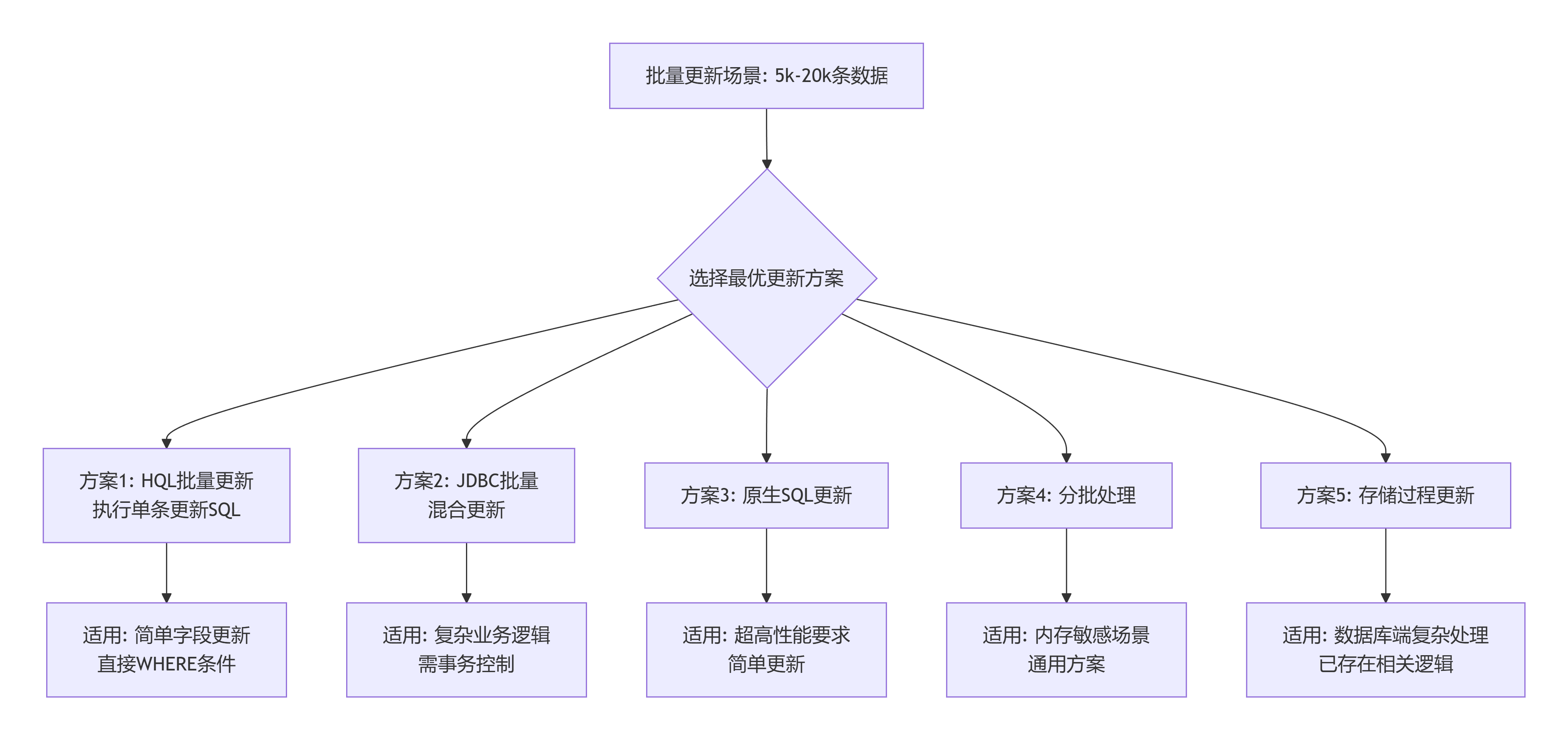
📊 各方案详细对比
| 方案 | 核心思路 | 优点 | 缺点 | 适用场景 |
|---|---|---|---|---|
| HQL批量更新 | 单条HQL更新所有匹配记录 | 最简单直接,Hibernate自动优化 | 灵活性差,无法处理复杂业务逻辑 | 简单字段更新,直接WHERE条件 |
| JDBC批量混合 | Hibernate查询 + JDBC批量更新 | 性能与灵活性平衡,事务可控 | 代码稍复杂,需要处理两种API | 复杂业务逻辑,需要事务控制 |
| 原生SQL批量 | 完全使用JDBC批量操作 | 性能最优,内存消耗最小 | 脱离Hibernate管理,失去缓存等特性 | 超高性能要求,简单更新 |
| 分批处理 | 将大数据集分批次处理 | 避免内存溢出,通用性强 | 需要额外分批逻辑 | 内存敏感场景,通用方案 |
| 存储过程 | 将逻辑移到数据库端执行 | 数据库端执行最快 | 移植性差,调试困难 | 数据库端已有复杂逻辑 |
🚀 方案一:HQL批量更新(最简洁)
适合:简单字段更新,直接WHERE条件过滤
java
@Transactional
public int batchUpdateByHQL(List<Long> ids, String newStatus) {
    String hql = "UPDATE YourEntity e SET e.status = :status WHERE e.id IN (:ids)";

    Session session = entityManager.unwrap(Session.class);
    Query query = session.createQuery(hql);
    query.setParameter("status", newStatus);
    query.setParameterList("ids", ids);

    return query.executeUpdate(); // 返回更新的行数
}
⚡ 方案二:JDBC批量混合(推荐)
适合:复杂业务逻辑,需要事务控制
java
@Transactional
public void batchUpdateWithJDBC(List<Long> ids, String newValue) {
    Session session = entityManager.unwrap(Session.class);
    Connection conn = session.doReturningWork(Connection::getConnection);

    String sql = "UPDATE your_table SET some_column = ?, update_time = ? WHERE id = ?";

    try (PreparedStatement pstmt = conn.prepareStatement(sql)) {
        int batchSize = 1000; // 每批处理量
        int count = 0;

        for (Long id : ids) {
            // 1. 先用Hibernate查询获取实体(如果需要业务逻辑)
            // YourEntity entity = session.get(YourEntity.class, id);
            // if (entity != null && entity.someBusinessLogic()) { ... }

            // 2. 设置JDBC参数
            pstmt.setString(1, newValue);
            pstmt.setTimestamp(2, new Timestamp(System.currentTimeMillis()));
            pstmt.setLong(3, id);
            pstmt.addBatch();

            // 3. 批量执行
            if (++count % batchSize == 0) {
                pstmt.executeBatch();
                pstmt.clearBatch();
                // 定期清空Hibernate一级缓存,防止内存溢出
                session.flush();
                session.clear();
            }
        }

        // 执行剩余批次
        pstmt.executeBatch();

    } catch (SQLException e) {
        throw new RuntimeException("批量更新失败", e);
    }
}
🏎️ 方案三:纯JDBC批量(性能最优)
适合:超高性能要求,简单更新
java
@Autowired
private DataSource dataSource; // 注入数据源

@Transactional
public void batchUpdatePureJDBC(List<Long> ids, String newValue) {
    String sql = "UPDATE your_table SET column1 = ?, updated_at = NOW() WHERE id = ?";

    try (Connection conn = dataSource.getConnection();
         PreparedStatement pstmt = conn.prepareStatement(sql)) {

        conn.setAutoCommit(false); // 关闭自动提交

        for (Long id : ids) {
            pstmt.setString(1, newValue);
            pstmt.setLong(2, id);
            pstmt.addBatch();

            // 每1000条执行一次
            if (ids.indexOf(id) % 1000 == 0) {
                pstmt.executeBatch();
                conn.commit(); // 分批提交
                pstmt.clearBatch();
            }
        }

        pstmt.executeBatch();
        conn.commit(); // 提交剩余

    } catch (SQLException e) {
        throw new RuntimeException("批量更新失败", e);
    }
}
🧩 方案四:分批处理(通用方案)
适合:所有场景,特别是内存敏感
java
@Transactional
public void batchUpdateInChunks(List<Long> ids, String newStatus) {
    int chunkSize = 1000; // 每批处理量
    List<List<Long>> chunks = partitionList(ids, chunkSize);

    for (List<Long> chunk : chunks) {
        // 使用方案一、二或三处理每个批次
        String hql = "UPDATE YourEntity e SET e.status = :status WHERE e.id IN (:ids)";
        Query query = entityManager.createQuery(hql);
        query.setParameter("status", newStatus);
        query.setParameterList("ids", chunk);
        query.executeUpdate();

        // 清除持久化上下文,防止内存溢出
        entityManager.flush();
        entityManager.clear();
    }
}

// 辅助方法:将大列表分割为小批次
private <T> List<List<T>> partitionList(List<T> list, int size) {
    List<List<T>> partitions = new ArrayList<>();
    for (int i = 0; i < list.size(); i += size) {
        partitions.add(list.subList(i, Math.min(i + size, list.size())));
    }
    return partitions;
}
📝 关键优化建议
-
批次大小调优:
-
500-2000 是通用推荐范围
-
可通过测试找到最优值:
batchSize = 1000通常是较好的起点
-
-
事务管理:
java
@Transactional(propagation = Propagation.REQUIRED, isolation = Isolation.READ_COMMITTED)
-
确保整个批量操作在一个事务中
-
考虑设置合适的事务隔离级别
-
-
监控与日志:
java
long startTime = System.currentTimeMillis(); // ... 批量更新操作 long endTime = System.currentTimeMillis(); log.info("批量更新 {} 条记录,耗时 {} 毫秒", ids.size(), endTime - startTime); -
避免的陷阱:
-
不要使用Hibernate的
session.update(entity)循环处理 -
不要一次性加载所有实体到内存
-
记得定期清空Hibernate session:
session.flush(); session.clear();
-
🎯 方案选择建议
根据你的具体需求选择:
-
简单字段更新 → 方案一(HQL批量) + 方案四(分批)
-
复杂业务逻辑 → 方案二(JDBC混合) 或 方案四(分批)
-
极致性能要求 → 方案三(纯JDBC)
-
内存敏感 → 方案四(分批) 是必须的
性能对比示例
假设更新2万条数据:
-
HQL批量更新:约 1-3 秒
-
JDBC批量混合:约 0.5-2 秒
-
纯JDBC批量:约 0.3-1 秒

汇聚全球AI编程工具,助力开发者即刻编程。
更多推荐
 13
13 0
0- 0


 已为社区贡献3条内容

所有评论(0)