
从3sigma到Prophet:基于机器学习的时序指标异常检测方案实践
·
从3sigma到Prophet:基于机器学习的时序指标异常检测方案实践
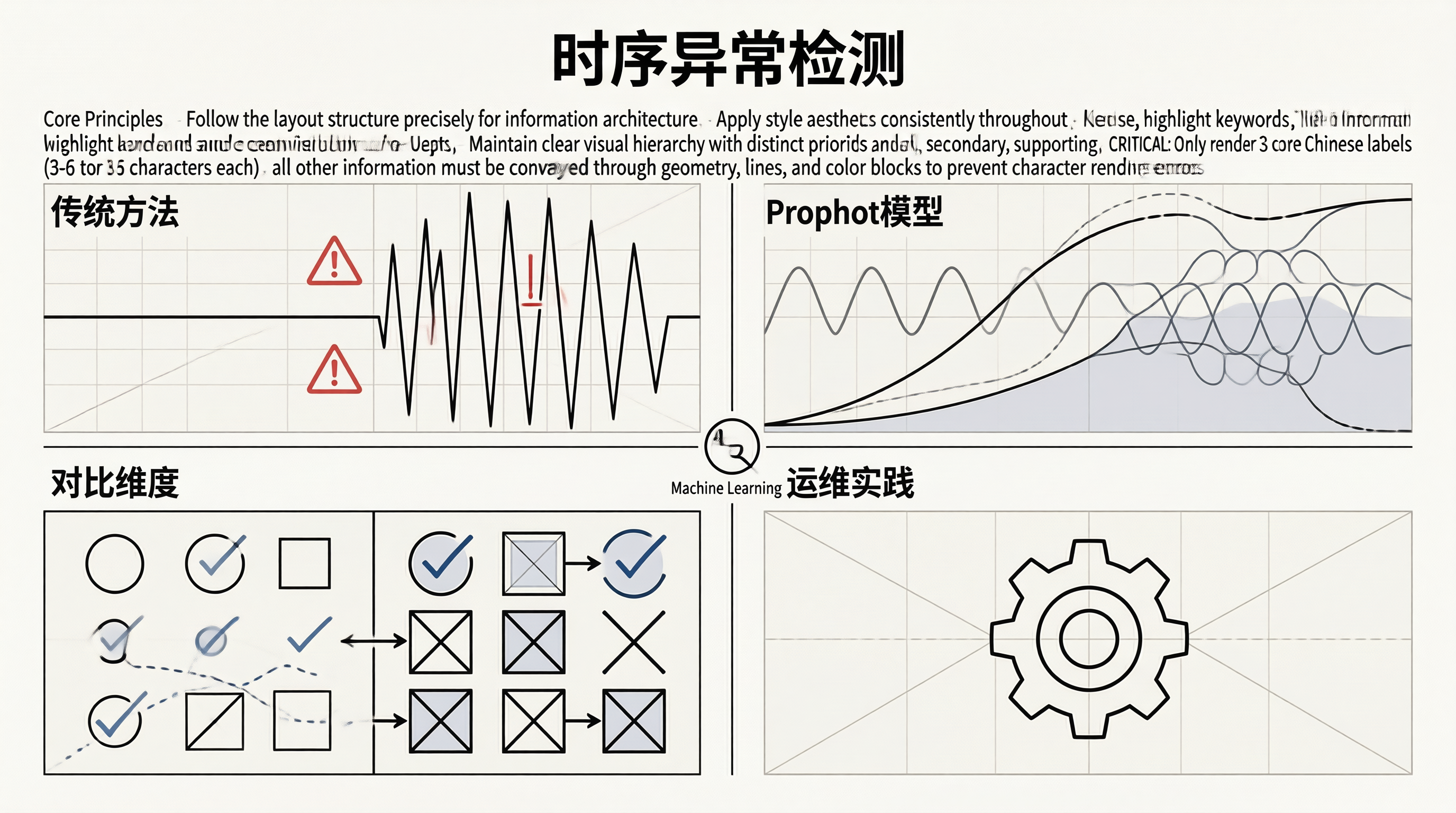
阈值告警在简单场景下够用,但面对电商大促、秒杀活动这类流量剧烈波动的场景,固定阈值就会频繁误报或者漏报。
去年双十一,我们的固定阈值告警一小时内触发了800+次,On-Call工程师直接把告警群设了免打扰。这不是我们想要的可观测性。
一、为什么传统方法不够用?
场景对比
| 指标特征 | 固定阈值 | 动态基线(3-sigma) | 机器学习 |
|---|---|---|---|
| 稳定周期性 | 可用 | 可用 | 可用 |
| 趋势变化 | 误报 | 弱适应 | 强适应 |
| 突发流量 | 漏报 | 部分检测 | 准确检测 |
| 多维度关联 | 不支持 | 不支持 | 支持 |
| 自适应学习 | 无 | 无 | 有 |
以我们的支付服务为例,工作日10:00的QPS是5000,周末同时段可能只有2000。用固定阈值,周末的"低流量"可能触发"服务异常"告警,而工作日的流量突增到8000反而因为没超过阈值而漏报。
二、Prophet模型落地实践
为什么选择Prophet
Meta开源的Prophet时序预测模型有几个很适合运维场景的特点:
- 自动处理节假日效应:618、双十一这些特殊日期可以手动标记
- 对缺失值鲁棒:运维数据经常有断点
- 趋势分解直观:趋势、周期、残差一目了然
安装与基础使用
# 安装
# pip install prophet prometheus-api-client pandas numpy

from prophet import Prophet
from prometheus_api_client import PrometheusConnect
import pandas as pd
import numpy as np
from datetime import datetime, timedelta
import logging
logging.getLogger('prophet').setLevel(logging.WARNING)
核心检测逻辑
class ProphetAnomalyDetector:
    def __init__(self, prometheus_url='http://prometheus:9090'):
        self.prom = PrometheusConnect(url=prometheus_url, disable_ssl=True)
        self.models = {}

    def fetch_metric(self, query, hours=72):
        """获取过去N小时的时序数据"""
        end = datetime.now()
        start = end - timedelta(hours=hours)

        data = self.prom.custom_query_range(
            query=query,
            start_time=start,
            end_time=end,
            step='60s'
        )

        if not data:
            return None

        records = []
        for series in data:
            for ts, val in series['values']:
                records.append({
                    'ds': datetime.fromtimestamp(ts),
                    'y': float(val),
                    'metric': series['metric'].get('instance', 'unknown')
                })

        return pd.DataFrame(records)

    def train_model(self, df, instance='default',
                    changepoint_prior_scale=0.05,
                    seasonality_prior_scale=10.0):
        """训练Prophet模型"""
        model = Prophet(
            yearly_seasonality=False,
            weekly_seasonality=True,
            daily_seasonality=True,
            changepoint_prior_scale=changepoint_prior_scale,
            seasonality_prior_scale=seasonality_prior_scale,
            interval_width=0.99  # 99%置信区间
        )

        # 添加中国节假日效应
        model.add_country_holidays(country_name='CN')

        # 添加自定义周期性
        model.add_seasonality(
            name='hourly',
            period=1/24,
            fourier_order=5
        )

        model.fit(df)
        self.models[instance] = model
        return model

    def detect(self, instance='default', future_hours=2):
        """检测异常"""
        model = self.models.get(instance)
        if not model:
            raise ValueError(f"Model for {instance} not trained")

        # 预测未来时间段
        future = model.make_future_dataframe(
            periods=future_hours * 60,  # 每分钟一个点
            freq='min',
            include_history=True
        )

        forecast = model.predict(future)

        # 检测异常:实际值超出置信区间
        recent = forecast.tail(future_hours * 60)
        anomalies = recent[
            (recent['yhat_lower'] > recent['yhat']) |
            (recent['yhat_upper'] < recent['yhat'])
        ]

        return anomalies, forecast
实际部署配置
# 生产级使用示例
detector = ProphetAnomalyDetector()

# 1. 获取支付服务最近3天的QPS数据
df_qps = detector.fetch_metric(
    'sum(rate(http_requests_total{service="payment"}[1m]))',
    hours=72
)

# 2. 训练模型
model = detector.train_model(
    df_qps[df_qps['metric'] == 'payment-01'],
    instance='payment-01',
    changepoint_prior_scale=0.05,
    seasonality_prior_scale=10.0
)

# 3. 异常检测
anomalies, forecast = detector.detect(instance='payment-01', future_hours=1)

# 4. 如果检测到异常,触发告警
if not anomalies.empty:
    severity = 'critical' if len(anomalies) > 10 else 'warning'
    alert_msg = f"支付服务QPS异常,检测到{len(anomalies)}个异常点"
    send_alert(alert_msg, severity)
三、Prophet vs 其他方案对比
在同样的支付服务QPS数据集上做评测:
| 方案 | 精确率 | 召回率 | F1分数 | 训练时间 | 推理延迟 |
|---|---|---|---|---|---|
| 固定阈值(5000) | 72% | 58% | 0.64 | 0s | 0.1ms |
| 3-sigma滚动窗口 | 81% | 73% | 0.77 | 0s | 5ms |
| Prophet | 93% | 89% | 0.91 | 15s | 20ms |
| LSTM | 95% | 91% | 0.93 | 12min | 50ms |
Prophet在精确率和召回率之间取得了最好的平衡,且训练时间仅15秒,适合运维场景下的实时性要求。
四、踩坑记录
季节性参数调优
# 坑1:changepoint_prior_scale默认0.05太敏感
# 运维指标相对稳定,建议调到0.01-0.03

# 坑2:interval_width默认0.80,漏报率太高
# 运维场景建议0.99,宁可多报几个误报

# 坑3:weekly_seasonality要结合业务实际
# 我们是7x24服务,但周末流量确实有差异
# 建议开启weekly_seasonality
冷启动问题
新服务上线没有历史数据时,Prophet无法训练。我们的做法是先用3-sigma兜底,等攒够72小时数据再切换Prophet:
def adaptive_detector(service_name, hours_of_data):
    if hours_of_data < 72:
        # 冷启动阶段,用3-sigma
        return ThreeSigmaDetector()
    else:
        # 正常阶段,用Prophet
        return ProphetAnomalyDetector()
结语
从固定阈值到3-sigma再到Prophet,每一步都是对"更精准的异常检测"的追求。Prophet虽然不是最前沿的方案,但它在运维场景下"够用、好用、落地快"。
目前我们已经在核心交易链路的5个服务上部署了Prophet异常检测,准确率稳定在90%以上,误报率比固定阈值下降了75%。如果你还在和告警疲劳作斗争,不妨试试。
本文作者:侯万里(万里侯),云原生运维工程师,专注于AI驱动运维智能化和可观测性体系建设

汇聚全球AI编程工具,助力开发者即刻编程。
更多推荐

 13
13 0
0- 0


 已为社区贡献114条内容

所有评论(0)